

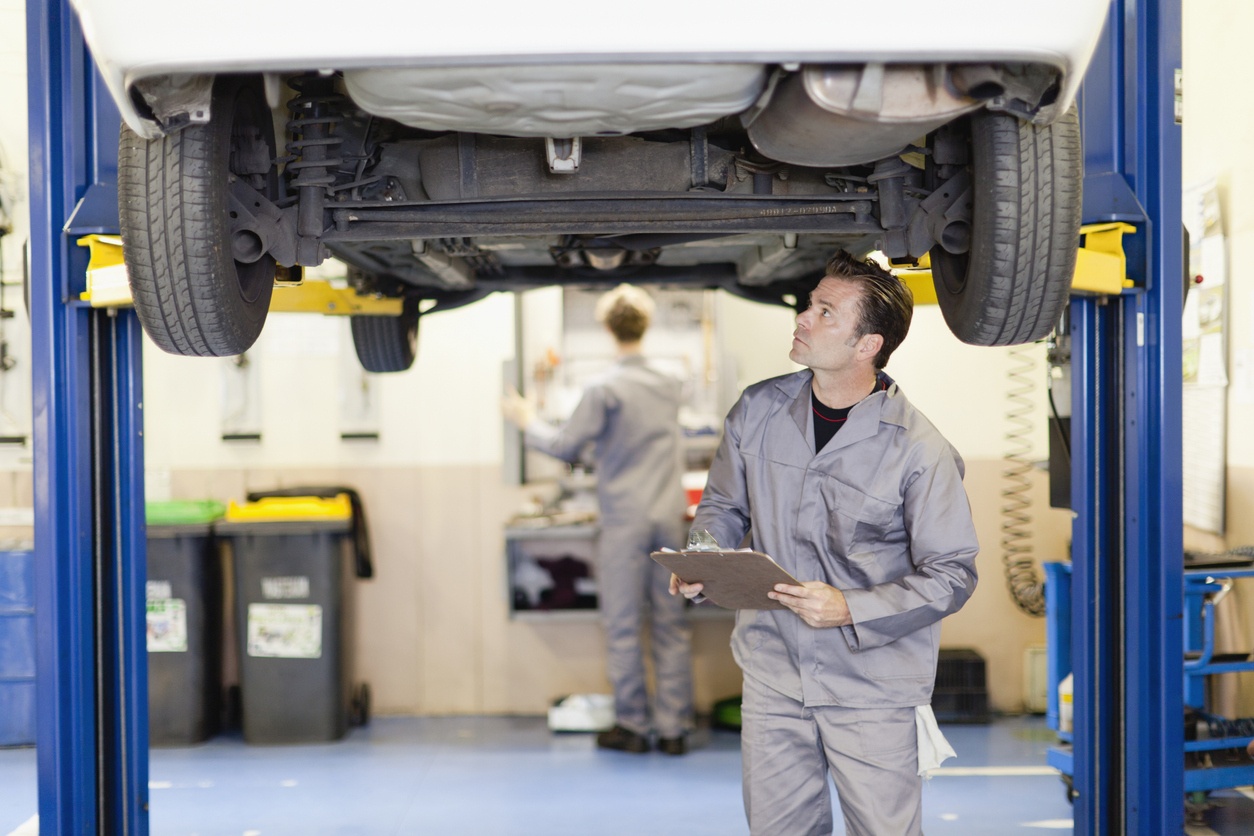
Car repairs can be both expensive and unavoidable. They often happen at just the wrong time, such as when your budget is committed elsewhere or you can’t afford to have your vehicle off the road. Sometimes, it can be appropriate to borrow money to get your vehicle fixed. Here’s what you need to know about how that works, and how car repair debt can be managed responsibly.
What is a car repair loan?
A car repair loan is a loan that you take out specifically to pay for repairs on your vehicle. It is usually structured as a personal loan, either unsecured or secured. Often, the amount won’t be as large as it would be if you were buying a new vehicle, but you might borrow to pay for expensive repairs like an engine failure, a transmission problem or repairs that need to happen to get your vehicle through its Warrant of Fitness. Sometimes people have to borrow to pay for damage from an accident that is not being covered by insurance.
How do car repair loans work in NZ?
The process usually works a bit like this.
 Step 1: Assessing the repair cost.
You’ll need to get a good idea of exactly what you need to pay. This will often mean getting a quote from the mechanic or other repairer that you will be using – perhaps even a range of quotes to make sure you’re getting a fair price. It’s helpful to know which work is urgent and must be done immediately, and what you might have time to get to (and potentially save for).
Step 2: Applying for finance
Once you know how much you need to borrow, you’ll work through the application process. The better finance™️ team can help you to get the paperwork you need together, but you’ll usually need to provide identification, proof of your income and expenses, and consent to have a credit check completed. Depending on your situation and the information you have provided, approval could happen quite quickly.
Step 3: Loan disbursement
Once the loan is approved, you have read and understood the loan contract, and have signed the loan agreement, returning it to the lender, the lender can move to giving you the money. They will either pay the funds directly to you or to the repairer. You’ll then pay back the loan according to the repayment structure you’ve agreed to.
Types of car repair finance options
You’ll have a few different options when it comes to the type of car repair finance you use. These are some of the most common.
Unsecured personal loans
An unsecured personal loan is an amount of money that a lender gives you without requiring any security. Because this is higher-risk for the lender, you may pay a slightly higher interest rate for this loan. You’ll then pay it back over a set period of time until the loan balance is clear. This is usually suitable for smaller or particularly urgent repairs.
Secured personal loan
A secured personal loan involves the lender using an asset as security. If you don’t pay back the loan, the lender can then take the security and sell it, to recover what it is owed. In this scenario, your vehicle might be used as security. The lender has more protection, so you may pay a lower interest rate. It’s higher-risk for you, though, if you don’t make repayments.
Credit cards or buy-now-pay-later
If you need very quick access to funds, some people opt for a credit card or BNPL lending for car repairs. Credit card interest rates can be quite high, and BNPL gets pricey if you miss payments. There is also a risk that credit card debt hangs around longer than you would like it to. We can help you work out whether a personal loan could be a better option.
Emergency savings
In an ideal world, we all have a sum of money sitting in a bank account that we can turn to in an emergency situation, often called an emergency fund. This means you don’t have to turn to debt at all to pay for your car repairs. But we know that this isn’t possible for many people, particularly given the cost-of-living pressures that have affected a lot of New Zealand households lately.
When does a car repair loan make sense?
There are lots of scenarios in which a car repair loan can make a lot of sense. If the repair is vital to keep your car roadworthy, for example, and you need it to get to work or to get the kids to school, you may need to borrow to fund this work.
If you have no emergency savings, you might have few options but to borrow, and it usually makes sense to look at the most cost-effective ways to do this. We can help you find a personal loan with repayments that comfortably fit within your budget so that you can clear the debt within a reasonable timeframe and be on the road with no worries.
When is a car repair loan not the best option?
Sometimes, it doesn’t make sense to borrow money to repair your car. If the cost of repair is more than the car is worth, you might consider whether you’d be better off borrowing to buy a new vehicle.
If the issue that you’re repairing keeps happening, you might question whether it’s worth doing the work again.
People who are already struggling with existing debt may not be in a position where it is sensible to add to that with further loans, and if the loan repayments will cause financial stress, that is best avoided. We can help you to consider how a loan would fit into your financial life.
How do interest rates affect car repair loans?
Interest rates are part of the picture when it comes to your car repair loan. The other bit is how long it takes you to repay the loan. Personal loans can have interest rates from about 10 percent to nearer 30 percent or higher.
The better finance™️ loan calculator shows that a $15,000 loan over 12 months with an interest rate of 12.95 percent would cost $1413 a month and total repayments (principal – the amount borrowed – plus the interest payable on the amount borrowed) of $16,956. Over the same term, with a rate of 16.95 percent, the monthly repayment would be $1442, with total repayments of $17,304.
Over 30 months, with a rate of 16.95 percent, monthly repayments drop to $651, but total repayments increase to $19,530.
How to avoid overpaying on car repair finance?
You may be able to avoid overpaying on car repair finance in a number of ways.
- Compare lenders: The better finance™️ team can do this for you. We’ll help you look at the options in the market and which might work for you.
- Check for fees: As well as the interest rate you’re paying, the cost of your loan may be affected by establishment or early repayment fees. It’s important to understand what you’re agreeing to.
- Limit your lending: Try to only borrow what you really need to cover the repair.
- Pay your loan off quickly: The less time you have the loan, the cheaper it will generally be. A reduced loan term, or extra payments if there are no prohibitive fees for early or additional repayments, may help.
Repair vs replace: How to decide?
You may be wondering whether it’s worth repairing your vehicle or whether you’d be better off just buying a new car. There are a few ways to think about this.
- Compare repair cost to current car value: How much is your car actually worth, and what percentage of that are you paying on the repair? If it’s close, it may not be worth the money.
- Consider vehicle age and reliability: How likely is it that you’ll need to do more work in future? If your car is prone to breaking down, you might decide an upgrade will be cheaper in the long run.
- Factor in future potential repairs: Are repairs only going to get more expensive and difficult? An expert should be able to give you a guide on what the future might look like for your vehicle.
How do car repair loans affect your credit score?
You might worry how borrowing to pay for car repairs will affect your credit score. In general, your credit history is built by making on-time repayments, and damaged by missed payments or defaults.
There might be a dip in your credit score in the short term when you first take out the loan, but over time, as you pay it back, it will improve.
Tips for managing future repair costs
You can also protect yourself against future repair costs.
Build a maintenance fund:
Putting a bit of money aside on a regular basis will help you to build an emergency fund that you can tap into if you encounter unexpected repairs in future
Schedule regular servicing:
Keeping on top of maintenance can stop problems from becoming as expensive, or help to identify them before they become urgent.
Maintain insurance coverage:
Insurance can help if you have an accident or other unexpected damage.
Consider roadside assistance memberships:
Sometimes, these can be a good way to avoid unexpected costs if you break down.
Frequently Asked Questions (FAQs)
Can I get a car repair loan with bad credit in NZ?
Yes, you may be able to. We can help you to work out your options.
How quickly can a repair loan be approved?
How quickly can a repair loan be approved?
Is it better to use a credit card or a personal loan for car repairs?
The right option will depend on your circumstances, but credit card debt can be expensive if it’s not paid off in full before the interest-free period ends.
What if I can’t afford the repayments?
Don’t take out a loan that you can’t afford to repay.
Can I repay a car repair loan early?
You may be able to. It will be important to check what early repayment fees might apply.
Want to get moving?
If you’re itching to get your car repairs done and get back on the road, get in touch with the better finance™️ team. We can help you to work out what might work for your vehicle and your individual circumstances.
Disclaimer: Please note that the content provided in this article is intended as an overview and as general information only. While care is taken to ensure accuracy and reliability, the information provided is subject to continuous change and may not reflect current developments or address your situation. Before making any decisions based on the information provided in this article, please use your discretion, and seek independent guidance.


-1.png?width=360&name=Better%20blog%20images%20(19)-1.png)
-1.png?width=360&name=Better%20blog%20images%20(3)-1.png)